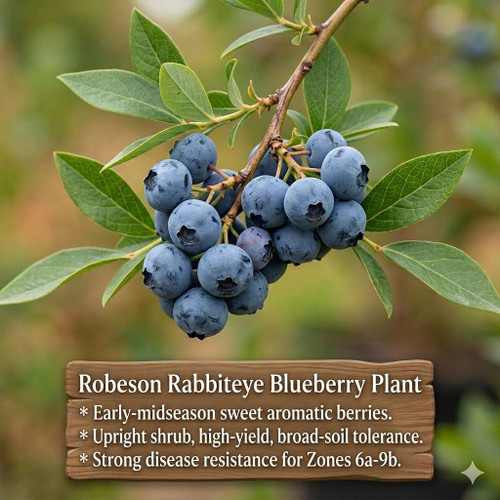
Robeson Rabbiteye Blueberry Plant

$29.99
(No reviews yet) Write a Review
  • Early‑midseason producing medium‑sized, very sweet, aromatic berries with excellent flavor and a reliable dry picking scar.
  • Upright, productive shrub yielding 10–15 lbs and tolerating a range of soils, including slightly higher pH.
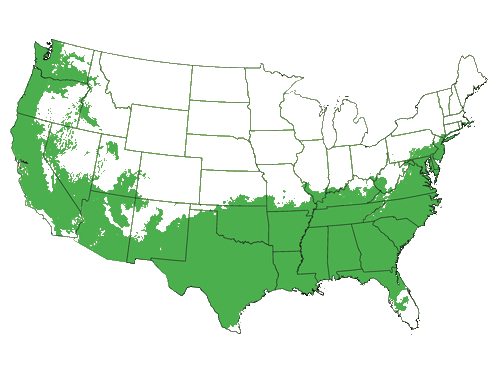
  • Well‑adapted to Zones 6–9 and valued for its strong natural disease resistance.
Adding to cart… The item has been added

Robeson Rabbiteye Blueberry Plant

Type: Rabbiteye
Zone: 7–9
Chill Hours: ~400–450
Ripening Time: Early to Mid Season
Pollination: Requires cross-pollination (pair with Brightwell, Premier, or Powderblue)

Product Overview

The Robeson Blueberry is a vigorous, upright pentaploid rabbit-eye hybrid known for its very sweet, aromatic, medium‑sized berries and exceptional productivity. This easy‑care variety thrives across a wide climate range, performing reliably in USDA Zones 6–9 with strong natural resistance to root rot and other common diseases.

Ripening in the early mid‑season, Robeson produces a concentrated 15‑day harvest window and consistently yields 12–15 pounds per mature plant. The berries are ideal for fresh eating and backyard picking thanks to their sweetness and aroma.

Key Features

Large berries with sweet, well-balanced blueberry flavor
• Vigorous plants with reliable productivity
• Early to mid-season harvest helps extend picking season
• Performs well in warm Southern climates
• Excellent choice for home gardens and edible landscapes

Brightwell Blueberry Bush

Rabbiteye Vaccinium ashei

Foliage ColorGreen

Flower ColorPink/White

Mature Width 6-8 ft

Mature Height 6-8 ft

Growing Zones 7-9 Outdoor

map-img

How to Grow

Soil Requirements: Blueberries need acidic soil with a pH of 4.5–5.5. Soil must be well-draining and rich in organic matter. Heavy clay or poorly draining soil should be amended or planted on a raised mound.

Where to Plant: Choose a location with full sun (6–8 hours daily) and good airflow. Avoid low spots, wet areas, or anywhere water stands after rain.

Planting Hole or Raised Mound: Dig a hole twice as wide as the container. Blend the native soil with pine bark fines and peat moss to help lower the pH if your soil is above the ideal range. Use additional soil mix to create a slight mound, especially in clay or slow-draining areas, to keep roots elevated and prevent rot.

Soil Amendments:

  • Use pine bark fines and peat moss to lower pH and create the ideal soil environment blueberries thrive in.
  • Use Espoma Soil Acidifier to safely lower soil pH and create the acidic conditions blueberries need to thrive.

Spacing: You can plant closer than recommended and manage plant size with pruning. Ensure there is enough room to walk and mow between rows if planting multiple bushes.

  • Rabbiteye: 5–6 ft apart
  • Southern Highbush: 3–4 ft apart

Mulching: Apply 1–2 inches of pine bark or pine needles around the base. Do not pile soil or mulch directly against the crown, which can suffocate the plant and cause stem rot.

Water After Planting: Give a deep soak immediately after planting. Water 2–3 times per week during the first month while roots establish. Water at the base of the plant rather than the leaves to help prevent leaf spot.

Container Growing: Grow in a 10–15 gallon container filled with an acidic mix made for azaleas, camellias, or blueberries, or blend your own using the materials above. Ensure excellent drainage, add extra holes if needed, and keep the pot on gravel or slightly raised off the ground to prevent standing water.

Watering Schedule:

  • Keep soil consistently moist but never soggy.
  • Provide 1–2 inches of water per week during the growing season and adjust based on rainfall.

Signs of Underwatering: Drooping leaves, small berries, or leaf scorch.

Signs of Overwatering: Yellow leaves, root rot, or slow growth.

Fertilizer Timing:

  • Early spring (bud break)
  • Late spring (after fruit set)

Fertilizer Type: Use an acid-forming, slow-release fertilizer with elemental sulfur. Products such as Espoma Berry-tone or Holly-tone work well. Feed plants in early spring and repeat again in midsummer.

What NOT to Do: Do not use manure or high-nitrogen fertilizers. Blueberries are sensitive to over-fertilization.

  • Year 1: Remove flowers to help the plant establish strong roots.
  • Years 2–3: Light shaping only; remove weak, crossing, or low branches.

Mature Plants:

  • Remove 1–2 oldest canes each winter.
  • Maintain 6–8 healthy canes.
  • Open the center for airflow.

When to Prune: Late winter while the plant is dormant.

Why Prune: Encourages larger berries, stronger new growth, and better airflow.

  • Rabbiteye Blueberries: Require 2–3 varieties for reliable fruit production.
  • Southern Highbush: Self-fertile but produce heavier crops with a companion variety.

Best Pairings:

  • Rabbiteye trios
  • Southern Highbush pairs
  • Legacy companions

Bloom-Time Matching: Pair varieties with overlapping bloom times (Early, Mid, Late).

Mulch: Helps retain moisture, suppress weeds, and reduce disease.

Soil pH Checks: Test soil yearly since blueberries decline if pH rises above the ideal range.

Common Issues:

  • Chlorosis (yellow leaves) → soil pH too high
  • Fruit drop → poor pollination or drought
  • Small berries → pruning or watering issues

Pest Prevention:

  • Birds: Use netting or deterrents such as flashers or reflective devices.
  • Other pests: Neem oil is an effective organic method for managing pests like aphids, mites, and whiteflies while also helping prevent fungal problems. Most hardware stores also offer additional safe pesticides if needed.

Winter Care: Apply heavier mulch and protect young plants from extreme cold.

Rejuvenation: Remove the oldest canes every 3–4 years to maintain productivity.

Leaf Spot: Leaf spot appears as small brown or purple spots on leaves. Remove affected foliage and treat with copper fungicide or another fungicide recommended for blueberries. Water at the base of the plant rather than the leaves to help prevent the disease. Many blueberry varieties naturally change color and drop leaves in the fall.