
Understanding Fungal Leaf Spot on Apache Blackberry Plants
Aug 26th 2026
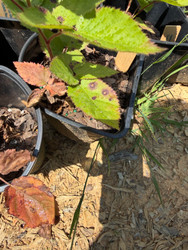
Round purple or brown spots on Apache blackberry leaves can be alarming, especially when several appear together. Unlike the broad reddish coloration sometimes caused by environmental stress, clearly defined spots with tan or gray centers are more consistent with fungal leaf spot.
Fungal leaf spot can develop when blackberry foliage remains wet for extended periods. Frequent rain, overhead watering, high humidity, crowded plants and limited airflow all create favorable conditions. Spores can spread between plants through splashing water, wet foliage, contaminated tools and infected plant debris.
What does fungal leaf spot look like?
Symptoms commonly begin as small purple or dark-brown dots. As the spots enlarge, their centers may become tan, gray or light brown while retaining darker purple borders. Multiple spots can eventually merge, causing larger damaged areas, yellowing or premature leaf drop.
A few affected leaves normally will not destroy an otherwise healthy blackberry plant. However, addressing the problem early helps protect new foliage and prevents unnecessary stress.
How we are caring for our Apache plants
At BerryKing, we are removing the most heavily affected leaves, cleaning away fallen plant material and improving spacing around the plants to encourage better airflow. We are also watering at the soil level whenever possible rather than repeatedly wetting the foliage.
We are treating the affected plants with a fungicide specifically approved and labeled for use on blackberries. We follow all label directions, application limits, protective-equipment requirements and harvest restrictions. Fungicides generally help protect healthy tissue from new infections; they do not erase spots that have already formed. New growth—not the appearance of existing damaged leaves—is therefore the best measure of improvement.
We are also giving the plants a light application of liquid kelp according to its label directions. Liquid kelp does not kill the fungus and is not a replacement for fungicide. We use it as a gentle supplement to help the plants through periods of environmental stress.
What should home growers do?
Remove badly affected leaves without stripping away more than about one-third of the plant’s foliage. Dispose of diseased material rather than leaving it around the container. Keep the leaves as dry as practical, allow room between plants and sanitize pruning tools before moving to healthy plants.
Before applying any treatment, choose a fungicide specifically labeled for blackberries and follow its directions exactly. Never assume that a product approved for another fruit or ornamental shrub is automatically suitable for blackberry plants.
Fungal leaf spot is manageable when recognized early. With sanitation, dry foliage, good airflow, careful monitoring and an approved treatment when needed, Apache blackberry plants can continue producing vigorous new growth.
At BerryKing.com, our goal is to identify plant problems honestly, respond responsibly and help every plant regain the strength it needs to thrive.