
The Mistake I Made Acidifying My Soil Too Quickly (And How My Blueberries Reacted)
May 5th 2026
Why Blueberry Leaves Turn Pale, Yellow‑Green, and Red After Adding Sulfur
Understanding sulfur shock, nutrient lockout, and what happens when you acidify too fast
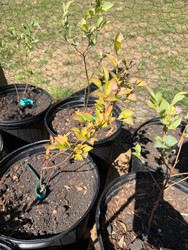
Blueberries love acidic soil — but they hate sudden changes. When sulfur is applied too aggressively, the plant can respond with dramatic color shifts: pale leaves, yellow‑green foliage, and unexpected red tones. Many growers mistake this for disease or deficiency, but the real cause is far simpler.
This exact situation happens when soil pH drops too quickly, especially when multiple acidifying products are applied too close together.
What Happened in This Case
In this situation, I applied
• applied powdered 90% elemental sulfur
• waited three weeks
• then added a fast‑acting liquid acidifier
That second application — the liquid — pushed the soil over the edge. Elemental sulfur works slowly, but the liquid acidifier works immediately, and the combination caused the pH to plunge faster than the roots could adapt. It also happened to have a few more cold evenings.
The result: sulfur shock and nutrient lockout.
Why the Leaves Changed Color So Quickly
When the pH drops too fast, blueberries temporarily lose access to several nutrients, even if those nutrients are present in the soil.
Iron lockout - Creates very pale leaves with darker green veins.
Magnesium lockout - Shows up as yellowing with red or pink margins.
Phosphorus stress - Triggers red or purple pigments (anthocyanins).
General micronutrient lockout - Makes the plant look washed‑out or unevenly colored.
This explains the exact sequence many growers see:
Very pale → slightly greener → yellow‑green → red‑tinted
It’s not disease. It’s not insects. It’s not permanent damage.
It’s simply the plant reacting to a rapid chemical change around its roots.
Why the Red Color Appears
Blueberries turn red when stressed — it’s a natural protective response.
Red pigments appear when:
• pH drops too quickly
• roots experience shock
• phosphorus becomes temporarily unavailable
• the plant is trying to protect new growth
The red coloration is a stress signal, not an infection.
Why the Leaves “Partially Greened Up”
After the sulfur applications, the plants got a little greener, but not fully healthy. That partial improvement is actually a clue:
• the elemental sulfur was starting to help
• but the liquid acidifier caused a sudden pH crash
• the roots shut down nutrient uptake temporarily
• the plant is trying to recover, but the rhizosphere is unstable
This is classic sulfur shock.
How to Fix It
The good news: blueberries recover quickly once the soil stabilizes.
1. Water deeply for 2–3 days
This buffers the pH and reduces the intensity of the acidification wave.
2. Stop all sulfur for 4–6 weeks
Let the soil biology catch up.
Elemental sulfur continues working for months — adding more too soon compounds the problem.
3. Optional: Apply gentle iron + magnesium
Use blueberry‑safe forms:
• iron sulfate
• magnesium sulfate (Epsom salt, light rate)
Avoid EDTA‑chelated iron, which is not ideal for acidic soils.
4. Expect full recovery in 10–20 days
Once the pH stabilizes, nutrient uptake resumes and the plant greens up naturally.
What This Is Not
This situation is not caused by:
• fungal disease
• root rot
• insects
• herbicide drift
• permanent nutrient deficiency
It’s a temporary physiological response to over‑acidification.
Final Thoughts
Sulfur is one of the best tools for growing strong, productive blueberries — but timing and dosage matter. When powdered sulfur and fast‑acting liquid acidifiers are used too close together, the pH can drop faster than the plant can tolerate.
The result is dramatic leaf color changes, but the plants almost always recover with time, water, and patience.
Understanding sulfur shock helps growers avoid unnecessary treatments and gives confidence that the plants will bounce back once the soil stabilizes.