Japanese Beetle Damage on Blueberries: What We’re Seeing in North Carolina in Early June
Jun 9th 2026
June 8 brought the first real wave of Japanese beetles here at our Monroe, NC nursery — and as always, these shiny green pests showed up right on schedule. But this year, something interesting stood out.
We grow 20+ blueberry varieties side‑by‑side, and only two showed notable feeding damage: Misty and Legacy. The rest — including our heavy producers like Brightwell, Premier, Powderblue, and Ochlockonee — had little to no activity.
That raised a question worth sharing with our customers: Why were only certain plants hit, and what can you do to protect your own blueberries?
Where the Damage Happened — and Why It Matters
The affected Misty and Legacy plants had one thing in common: They were growing in tall grass, not on our usual pallets, gravel, or tarp surfaces.
That environmental difference matters more than most people realize.
Why tall grass attracts beetles
-
Japanese beetles lay eggs in turf and grassy areas.
-
When adults emerge, they feed on the nearest tender foliage.
-
Blueberries growing directly above grass become the first buffet they encounter.
-
Plants elevated on pallets or surrounded by gravel/tarp are far less attractive.
This year’s pattern at our nursery was a perfect demonstration of that behavior.
What the Damage Looked Like
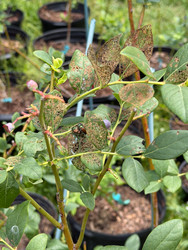
Japanese beetles feed by skeletonizing leaves — chewing out the soft tissue between the veins. On blueberries, this often appears as:
-
Ragged holes
-
Thin “lace-like” patches
-
Clusters of beetles feeding together on tender new growth
Fortunately, blueberries can tolerate light to moderate feeding without long‑term harm, especially early in the season.
How We Controlled Them
We used two simple, effective, and customer‑friendly control methods:
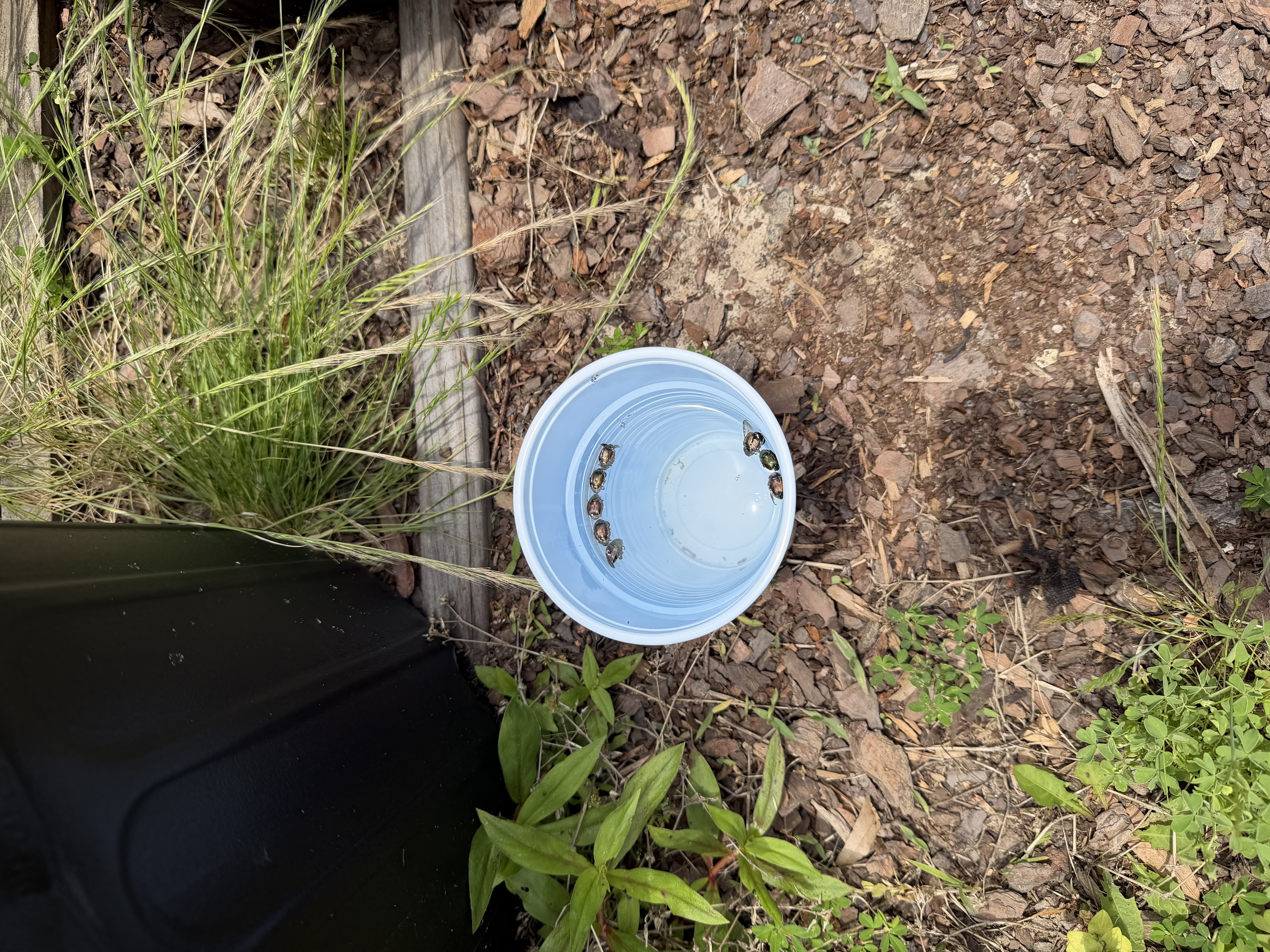
1. Hand‑knocking into soapy water
A bucket of water with a splash of dish soap works extremely well.
-
Beetles drop straight down when disturbed.
-
Morning is best — they’re sluggish and easy to catch.
-
Zero chemical residue.
This is our go‑to method for organic‑leaning growers.
2. Spot‑spraying beetles with Sevin
We did not blanket‑spray plants. Instead, we used Sevin to target only the beetles themselves, minimizing impact on pollinators and beneficial insects.
Spot‑spraying is ideal when:
-
Beetles are clustered
-
Damage is localized
-
You want fast knockdown without broad coverage
For customers who prefer alternatives, insecticidal soap or pyrethrin can also work when applied directly to the insects.
Why Some Varieties Attract More Beetles
Blueberry varieties differ in:
-
Leaf thickness
-
Tenderness of new growth
-
Aromatic compounds
-
Timing of flushes
Misty and Legacy tend to push soft, flavorful new foliage early — a favorite for beetles. But environment mattered more than genetics in this case. The same varieties on pallets had zero feeding.
How Home Growers Can Prevent Japanese Beetle Damage
Here are the most effective steps you can take:
-
Reduce tall grass around your berry rows — mow, weed‑eat, or mulch heavily.
-
Use mulch (pine bark, pine needles, or wood chips) to discourage beetle emergence.
-
Hand‑remove beetles daily during peak season.
-
Spot‑treat clusters with Sevin, pyrethrin, or insecticidal soap.
-
Avoid broad spraying during bloom to protect pollinators.
-
Consider row covers for young plants if beetle pressure is high.
The Good News
Even though Japanese beetles are annoying, they rarely cause serious long‑term harm to established blueberry bushes. Catching them early — like we did this week — keeps plants healthy and productive.
And if you’re growing blueberries at home, remember: Environment and maintenance matter more than the variety itself. Keep grass down, keep plants mulched, and you’ll dramatically reduce beetle pressure.